Sunday, February 6, 2011

Slovakia


Well so much happened to Brisbane since our last post. The floods received a great deal of media coverage in Europe and we were in touch with many of you via email and phone. We were so upset to hear what everyone went through. A special thank you to all those who helped us – either by taking care of our property, offers of help or by keeping us up-to-date with the latest news – it was all greatly appreciated. Needless to say it was very difficult being so far away.

And so – back by popular demand (thanks for the emails from those who were missing the blog) here’s a bit of an overview of what got up to during the last stages of our journey – when we weren’t watching the news!

8 January 2011

Today was the day we’d been looking forward to with some level of nervous anticipation – our journey over the Tatra mountains from Zakopane in Poland to Stary Smokovec in Slovakia. Before we left Australia we tried to research the best way to make this journey – but it proved difficult to get consistent information about the frequency of buses etc – especially those that actually cross the border. Worst case scenario, though, we knew we could get a bus to the Polish side of the border and then walk across (the snow covered mountain!) to Slovakia for another bus.


As it turned out the journey was quite fun! We managed to catch a little local mini-bus that made its way over the mountain, across the border and into the Slovakian villages. No room for luggage underneath this bus – we had to take it on board with us and so managed to take up four seats! No-one seemed to mind.

On arriving at tiny, tiny Stary Smokovec, as we walked up the main(?) street we were greeted by our most wonderful host who made us feel extremely welcome and gave us some tips on how to spend our time.


Spent the afternoon using the little electric railway to explore all the surrounding villages and ski areas – despite the freezing cold and the dense fog!

A little conveyor belt - takes skiers (and us!) up to the ski lift.

A fun gondola ride and...

...we're at the top!

And back to Stary Smokovec...

...it's about 6pm - foggy and freezing! Absolutely no-one around...

9 January 2011

Unfortunately we had only allowed for one night in Stary Smokovec – but all good things must come to an end and we had more to discover!

First we took the little electric railway again – this time down the mountains to Poprad. Then we literally had two minutes to change trains (including finding the platform – and all in Slovakian!) so we could head to Bratislava. Somehow managed to do that (just as the doors were closing!) and then enjoyed our train journey through the beautiful Slovakian countryside.


It was almost dark by the time we arrived in Bratislava, but we still managed to take in some sights before having dinner by the Danube. Spent a lovely evening at the opera – a performance of Faust. 

The opera house

We’d seen this in Milan in July however at that time most of the cast, back-stage staff and the orchestra were protesting about the austerity measures and so refused to wear costumes or move props. This performance in Bratislava, therefore, was much richer and easier to understand – even though it was sung in French with Slovakian surtitles!


10 January 2011

Bratislava is a lovely, easy town to explore on foot – and that’s just what we did today. Our hotel was conveniently located right in the middle of the old town and so we didn’t have to go far to see amazing things.


Firstly, we walked up to the castle. Despite the fog, we still had a great view across Bratislava – especially of the Novy Most (or New Bridge – also known as the UFO bridge for obvious reasons as you’ll see in the photo below) built by the Soviets in the 1970s. Unfortunately, a beautiful synagogue was destroyed (unnecessarily) to make way for this bridge. There is now a monument where it once stood.


Just below the castle is the old Jewish area of Bratislava – lots of interesting little streets and laneways to wander through. We spent a fair bit of time at the wonderful Museum of Jewish Culture – very friendly people and a really interesting collection.


Where the synagogue once stood - with the UFO bridge in the background.

Further explored the old town before heading out a little bit to see the beautiful ‘blue church’ – The Church of St Elizabeth. This beautiful Hungarian Secessionist Catholic church was built in the art nouveau style in the early 1900s.


Venturing to the church allowed us to explore the outer suburbs – it’s often good to step off the beaten track. Met a lovely lady (about our age) in a café who told us a little of her life and what it was like to grow up in Slovakia. Apparently she learned to speak English through her work in hospitality and not at school, where they were made to learn Russian.

One of the charming aspects of Bratislava is that every now and again you come across a discreet, often peculiar statue - like the ones below. You really have to look to find them - which is fun in itself. 


A true Irishman, Phil maintains a keen interest in the Irish pubs of the world, so tonight we had dinner at The Dubliner – which was actually very nice.

There's nothing like a read by the fire at the end of a cold day's sightseeing!

And so ended our time in Slovakia – a thoroughly enjoyable experience. 

New beers:
Zlaty Bazant
Staropramen


Saturday, January 8, 2011

Krakow to Zakopane

5 January 2011 – Krakow

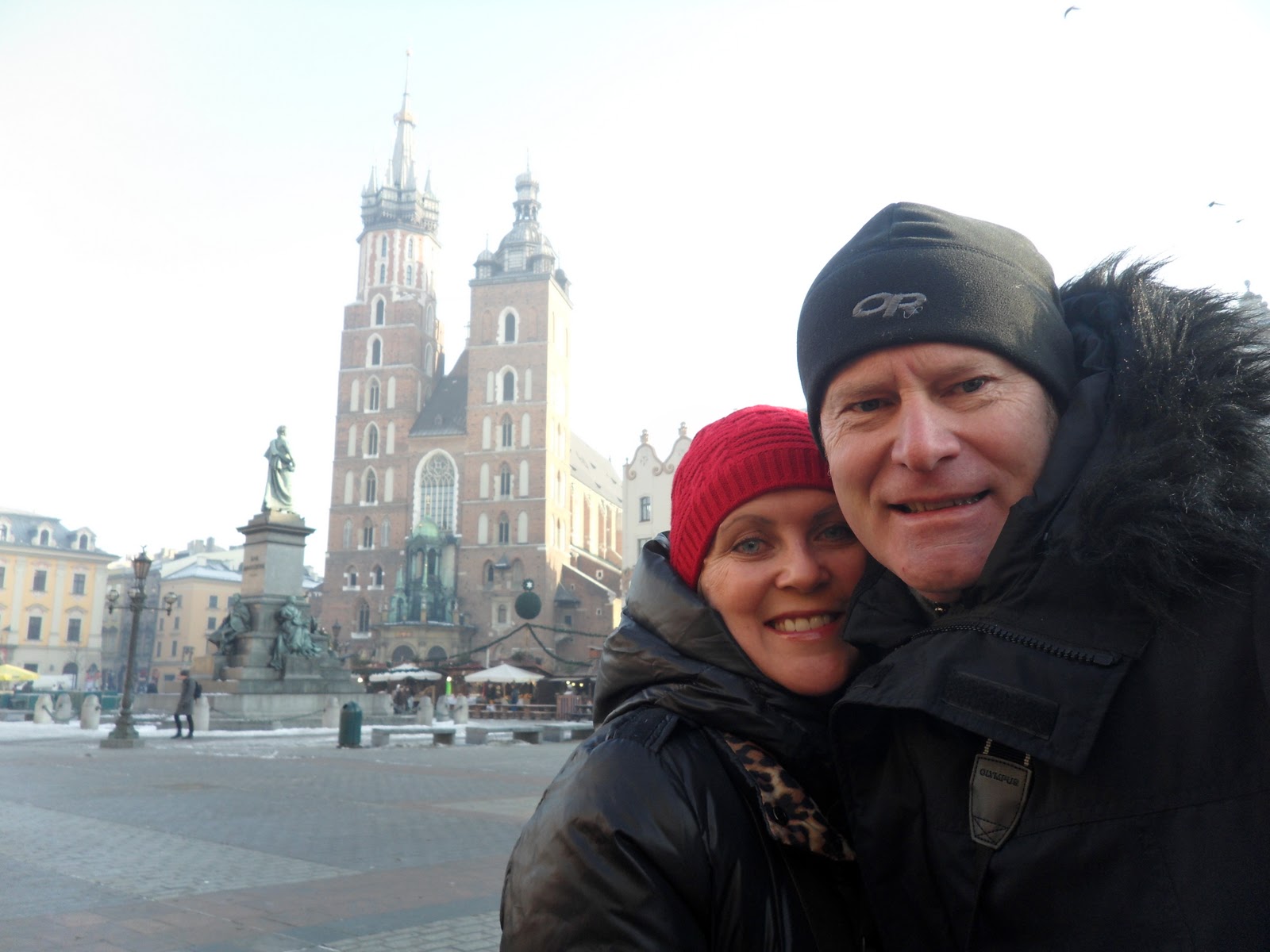
This morning we continued our exploration of the area immediately around Krakow's main market square.


The Basilica by day

Our first planned event for the day was a visit to Princes Czartoryski Museum. We’re on a mission to see all of the few remaining Leonardo da Vinci paintings in the world. Krakow has one and it’s in this museum. We were so excited as we made our way down the street. Excitement soon turned to disappointment as we read the sign on the door which said that the museum is currently undergoing renovation and will be closed for another month!! Perhaps we’ll have to come back to Krakow some other time – not such a bad thing!


The old town wall


Next stop was a visit to Wawel – a hilltop area with a beautiful castle and cathedral. For over 500 years, Polish monarchs were crowned here, ruled from here and were buried here. Our visit focused on the cathedral, which was consecrated in 1364. We really enjoyed climbing the bell tower to see the Sigismund Bell, which is 2m high, 2.5 m in diameter and weighs 11 tonnes.

Wawel

The cathedral

Sigismund Bell


Climbing the bell tower

From Wawel we made our way to Kazimierz – now an inner suburb or Krakow but once an independent town with its own laws. Within Kazimierz is an area which for centuries was the centre of Jewish culture – until the mass deportation and execution of Jews during WWII. In 1939 approximately 65,000 Jews lived in Krakow (mostly in Kazimierz). Only about 6000 survived the war. The architecture in this area is really beautiful.


Kazimierz

Our journey of discovery then took us across the river to Podgorze – another part of Krakow which is significant in terms of Jewish history. During WWII, approximately 15,000 Jews were forced to live here in a ghetto, and from here they were ‘selected’ to either stay or be put on a train destined for a concentration camp. Plac Bohaterow Getta is a square in the centre of this former ghetto – this is where the ‘selections’ took place. Now the area is somewhat of a memorial. It contains 70 empty chairs which represent the furniture and other possessions discarded by those destined for the camps.


While in Podgorze, we visited Oskar Schindler’s enamelware factory – which has now been turned into a museum of the occupation of Krakow. Only recently opened, this museum is very cutting edge. The exhibitions are extremely well thought out and life in Krakow has been represented very authentically. A must see.

As we had walked and walked all day – away from the centre of town – we had quite a walk back to the main market square for our evening’s entertainment – a piano recital in a beautifully restored house. The pianist was wonderful – the composer Chopin (quite appropriate for a visit to Poland, we thought) – the surroundings beautiful. A fabulous end to a fascinating day.

A quick snack (sausage on bread, of course) in the main market square - before the recital

The beautiful recital room

6 January – Auschwitz and Wieliczka

There are two ‘must see’ spots just outside of Krakow. One is Auschwitz which needs no introduction and the other is Wieliczka – a salt mine which has been in continual use for over 700 years. Today, we visited both of those sites.

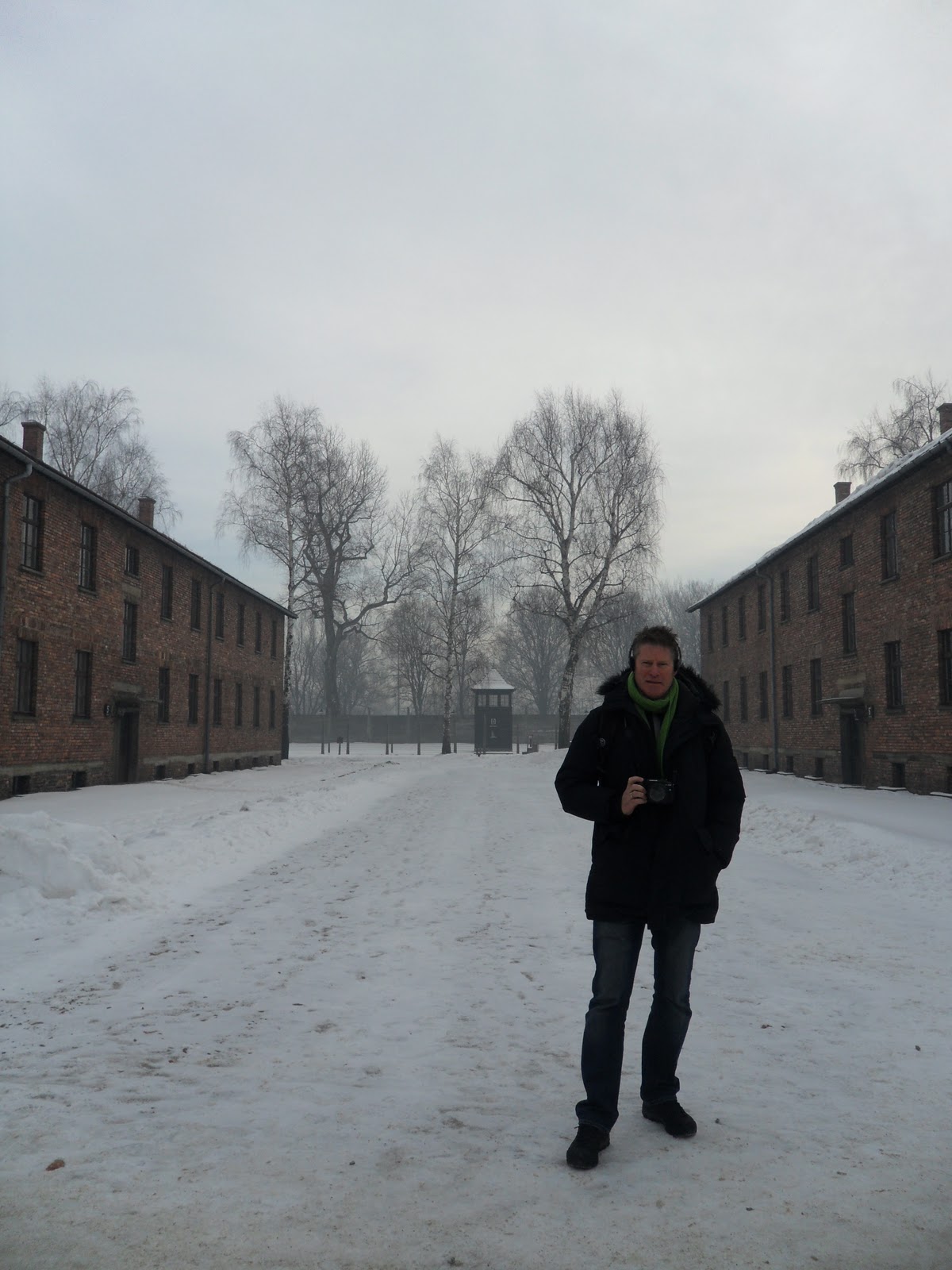
A visit to Auschwitz is a life-changing experience. It has two parts – the original Auschwitz which was set up by the Germans in 1940 in pre-existing buildings (once Polish army barracks) and Birkenau (also referred to as Auschwitz II) which was purpose built 2km away in 1941 and 1942. Approximately 1.6 million people of 27 different nationalities were killed here. Of those, 1.1 million were Jews. We think the pictures below capture the mood.


Later in the afternoon we visited Wieliczka – the salt mine. This was well worth the journey. Our visit took us about 135m below ground (via nearly 400 steps) through a maze of tunnels and chambers – all carved by hand from salt. Some of the chambers have been carved into chapels, complete with statues and altarpieces. In all, we apparently walked for 2km and still only saw 1% of the total mine.

One of the many tunnels


A relief of The Last Supper - carved by a miner into the salt wall of an underground cathedral

A refreshment stop in an underground cafe carved into the salt - the 'deepest' beer Phil has ever had!

Finished our day with a great evening back in Krakow – a wonderful little café for dinner and then a visit to Piec ‘Art – a jazz club for a night cap. This has been a really enjoyable city to visit and we’d love to come back again.

7 January 2011 – Krakow to Zakopane

Today we commenced our journey into the Tatra mountains. We were up early and at Krakow’s coach station in time for our bus to Zakopane – Poland’s winter sports capital. Once a small mountain village, Zakopane became quite well known in the late 1800s when writers, composers and artists started to visit looking for inspiration.


Zakopane is about 850m above sea level. After exploring the beautiful village itself, marveling at the lovely wooden buildings and tasting the amazing food, we took the funicular to Mt Gubalowka – 300m higher. We had a great afternoon on the mountain watching the skiers and doing the usual silly things – snow-ball fights, making snow angels, building a snowman… Phil even tried one of the local specialities – hot beer with honey. Let’s just say he’s not really a fan.

Mmmm... hot beer... and drunk through a straw!!!

The funicular track

No explanation needed!

Meet Stanislaus - our Polish snowman


The beautiful 'Old Church' in Zakopane - built in 1851. A new church was built when the congregation outgrew this one.

Speaking of beer – a few friends have emailed us suggesting we should extend the original challenge of a new beer each day in England to include a new beer / drink for each country we visit while in this part of the world. Well – owing to popular demand – Phil has taken on this additional challenge. The results for Poland are:

New beers: Tyskie and Zywiec
New vodkas: Polonaise and Soplica

And so – tomorrow we head across the top of the Tatras into Slovakia! A new mountain village, a new language, new beers… We have no idea how we're going to get there - no transport arranged - no plans... Watch this space!